
208–212 W Lexington Ave · Independence, MO
The Street Building
Built 1908 on the historic Independence Square. This is the documented history of the walls around you — drawn from National Park Service records and the original Sanborn fire-insurance maps.
Long before the first Old Fashioned was poured, this corner of the square was a working block of restaurants, drug stores, and a telegraph office. The building you're standing in was raised in 1908 by a master brick mason named William F. Street — and a generation later it printed the Independence Sentinel newspaper that gives our room its name.
Everything below is sourced. Where the record is firm, we say so plainly. Where it's local lore, we say that too.
A timeline of the building
- Before 1908
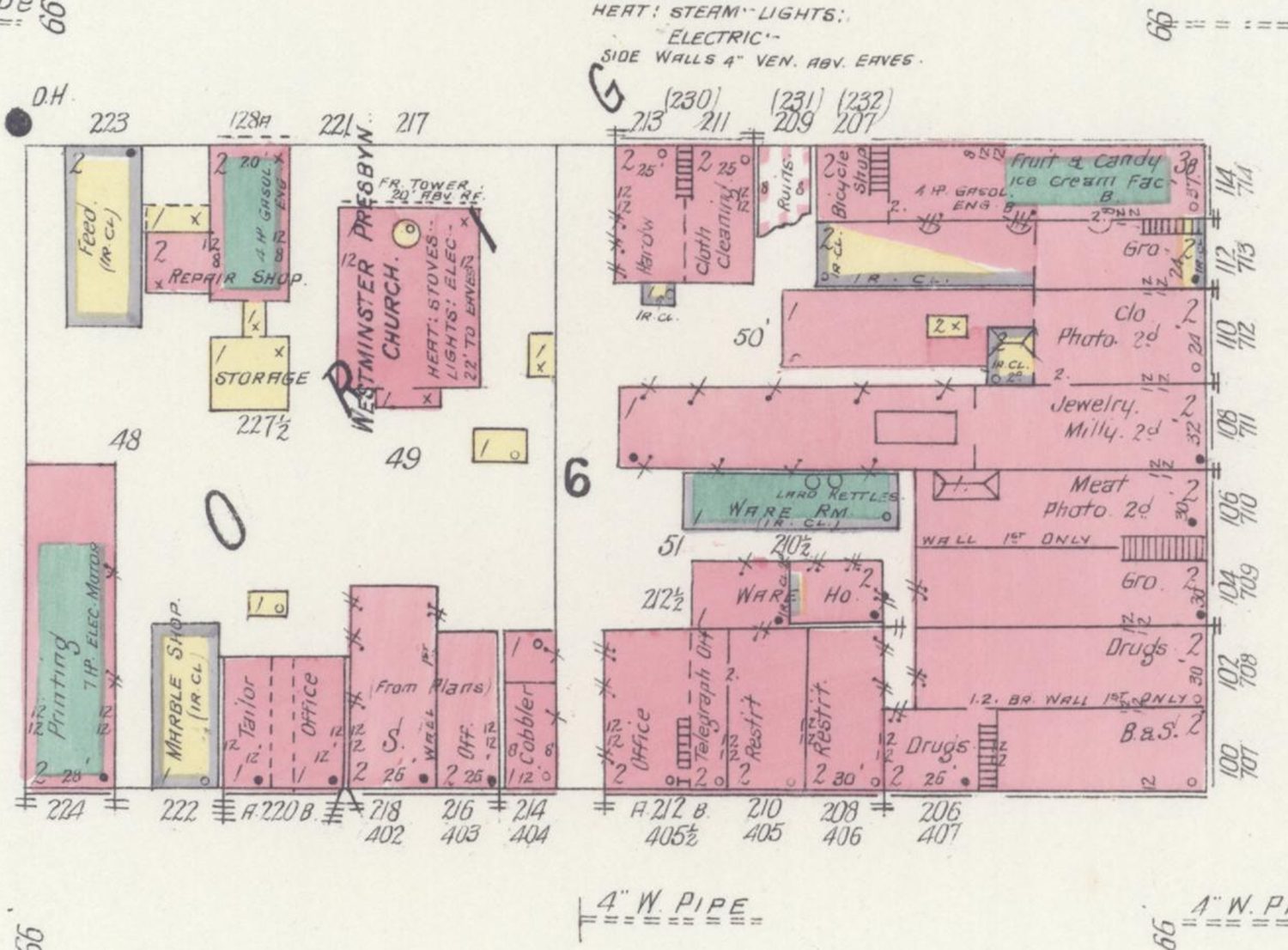
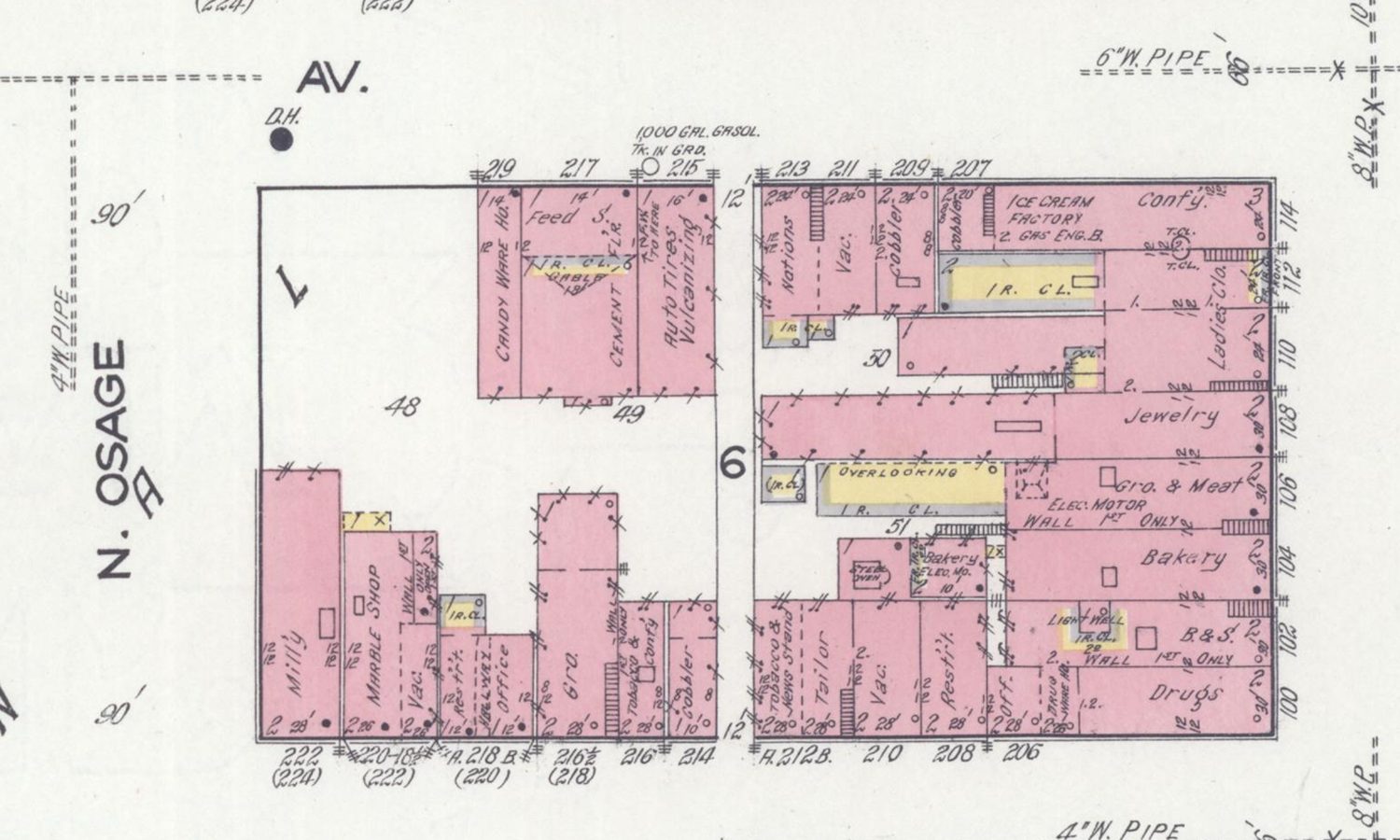
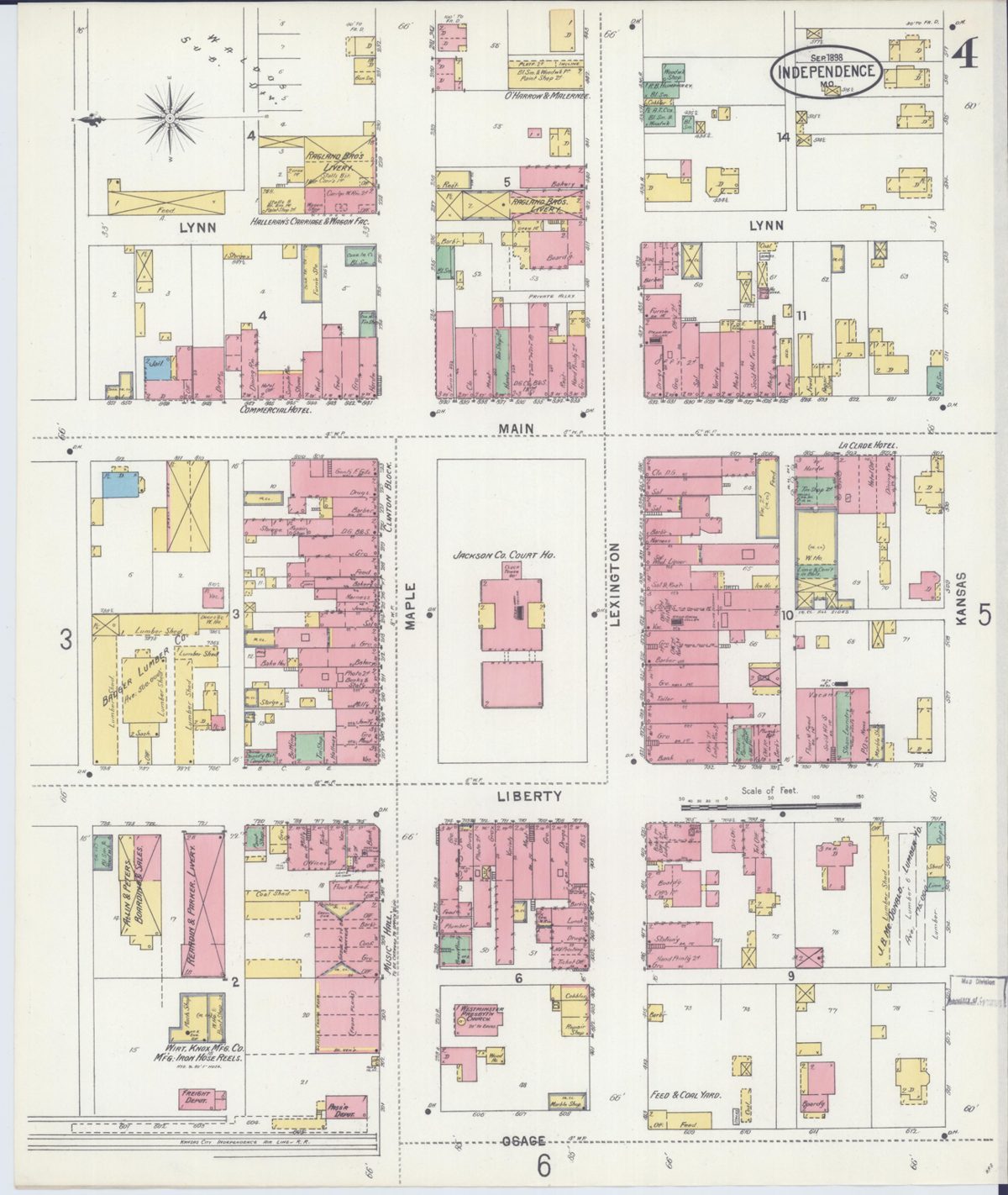
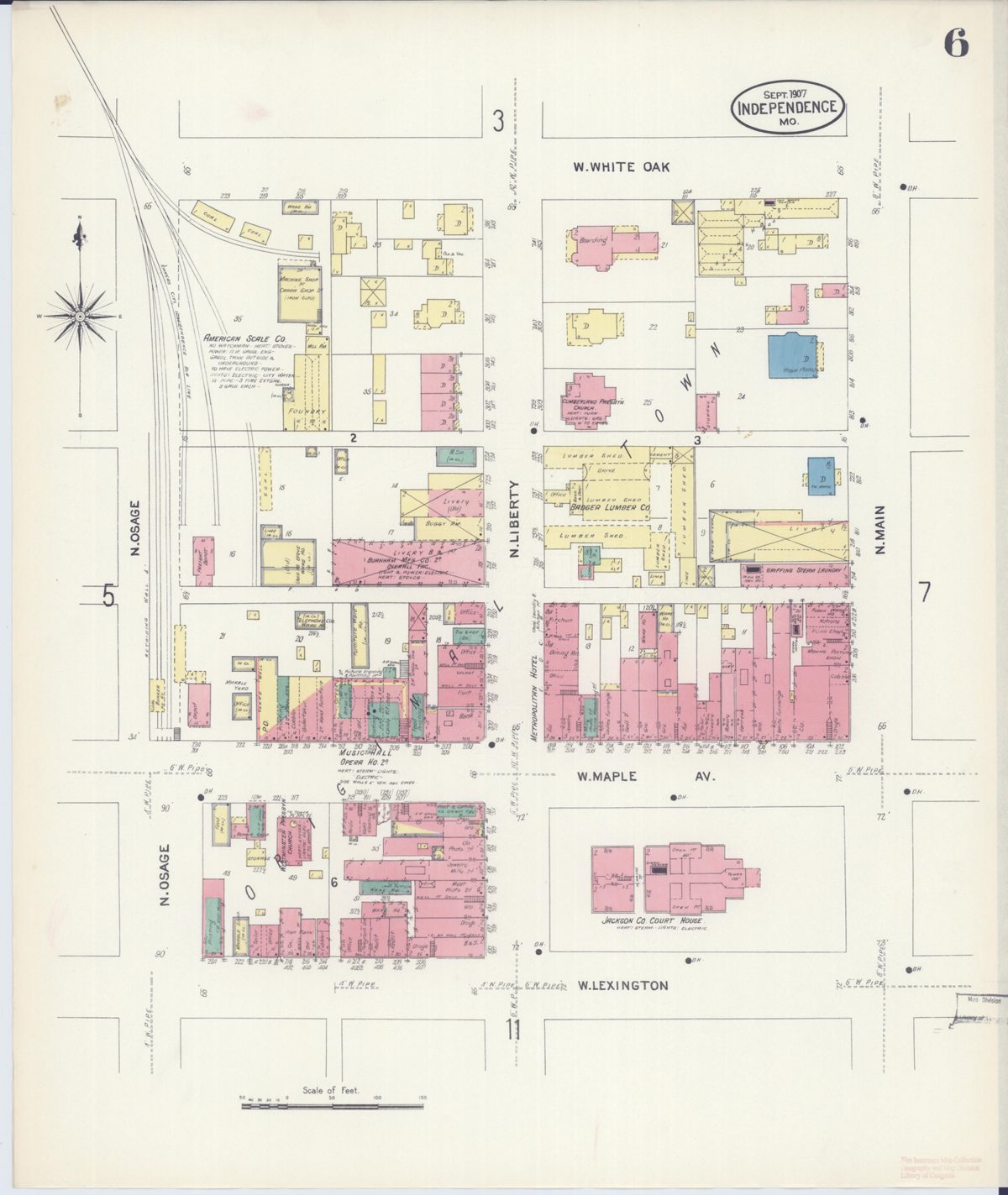
The Independence Square is already a dense ring of brick storefronts. The 1898 and 1907 fire-insurance maps show this exact lot occupied by brick buildings — restaurants at 208 and 210, an office and telegraph office at 212, and a drug store at 206. A "Ruins" note on the 1907 map marks fire damage from the 1906 square fires nearby.
- 1908
William F. Street builds the Street Building. A St. Louis–born master brick mason who came to Independence around 1883, Street raised the two-story brick building — three storefronts below, apartments above — by reusing the rear and side walls of the older structure on the lot. He died in 1910, two years after finishing it.
- 1910s
The new building fills with trade. Around 1911, Own Dry Cleaning is at 210; the Postal Telegraph Cable Company and a Kansas City Star office sit at 212. By 1916 the storefronts read drug store, restaurant, and tailor.
- 1930
City directories place the Marinello Shop at 212 — a beauty salon under the era's national Marinello beauty-culture brand, and the namesake of today's Marinello gift shop. Next door at 208 sits the Sentinel Publishing Company, which produced the Independence Sentinel newspaper. The Library of Congress dates that paper to 1866 and tracks it as one continuous weekly that reached its 100th volume in 1966 — a full century of news. It's the heritage that gives The Sentinel Room its name.
- 2020–2024
Bree and Travis Gensler buy the red-brick building — three storefronts and two loft apartments — around 2020 and restore it. They open The Marinello gift shop, and on March 9, 2024 The Sentinel Room at 208, in the former newspaper space.
- Today
One building, three doors: The Sentinel Room cocktail lounge (208), The Marinello gift shop (210), and Three Trails Lofts lodging upstairs (208½).
Read in the original maps
The Sanborn Map Company surveyed Independence block by block. These public-domain sheets from the Library of Congress show our footprint before and after it was rebuilt — pink ink means brick.
What we can — and can't — prove
We'd rather tell you the documented story than a tidier one. A few honest notes on the record:
- The newspaper heritage checks out: the National Park Service record states the Sentinel Publishing Company "produced the Independence Sentinel" at 208, and the Library of Congress dates that paper to 1866 (founding publisher James L. Gray) with a continuous run to its 100th volume in 1966. Ownership changed hands over that century — the company at 208 in 1930 carried on the same newspaper.
- The Independence Sentinel was produced at 208 W Lexington by 1930 — the very storefront The Sentinel Room occupies today.
- The adjacent Jackson County Courthouse was listed on the National Register of Historic Places in 1972.
- The full chain of owners between William F. Street (d. 1910) and today still lives in Jackson County deed records — research in progress.
Primary sources: the National Park Service nomination for the Harry S. Truman Historic District; Sanborn fire-insurance maps (1898, 1907, 1916), Library of Congress; the Library of Congress U.S. Newspaper Directory. The Marinello name traces to the national Marinello beauty-culture brand of the early 1900s.
The building has poured a lot of stories. Come add yours.