
The Ghost of Kansas City Whiskey: How J. Rieger & Co. Came Back From the Dead
Missouri was once a whiskey state, and then it mostly wasn't, and the reason is a single word: Prohibition. When the 18th Amendment shut the taps in 1920, it didn't just interrupt Missouri distilling — it very nearly erased the memory of it. Distilleries closed, equipment was scrapped, buildings were repurposed or demolished, and a whole industry slid out of living memory. For most of a century, if you'd told a Kansas Citian that their town once had a great whiskey house, they'd have looked at you sideways.
This is the eighth piece in our Kansas City whiskey history series, and it's about the most spectacular of those ghosts — and its improbable resurrection.
The House That Prohibition Killed
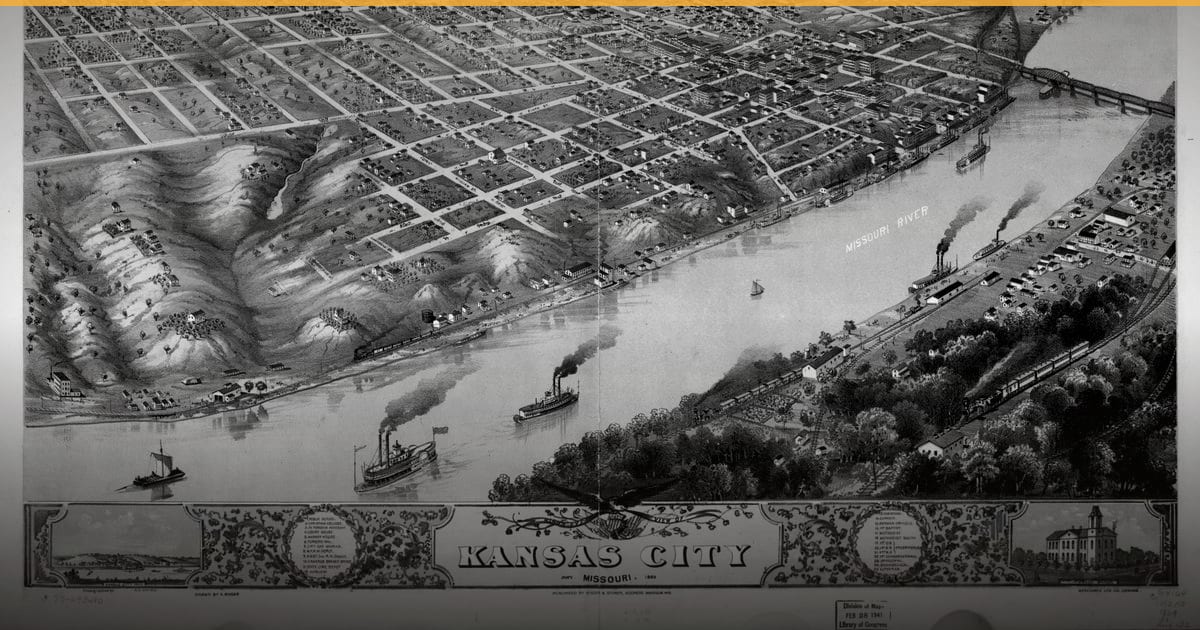
J. Rieger & Co. was founded in 1887 by Jacob Rieger, an immigrant from the old Austro-Hungarian empire, in the West Bottoms of Kansas City — that same industrial, saloon-packed river district where the Pendergast machine was born. His son Alexander grew it into something remarkable: a sprawling mail-order liquor business with, by the company's account, more than a hundred products and a customer list that ran into the hundreds of thousands. It was, by its own telling, one of the largest mail-order whiskey houses in the country.
We'll be precise about that last part, because it's the company's own claim and we like to flag those: "one of the largest mail-order whiskey houses in the country" is Rieger's own historical boast, widely repeated but not independently audited. Take it as the family's proud memory rather than a certified ranking. What isn't in doubt is that Rieger was a genuinely big deal in pre-Prohibition Kansas City — a serious operation shipping whiskey by mail across the country from the West Bottoms.
And then it died. National Prohibition arrived, and in December 1919 J. Rieger & Co. shut down. The family pivoted to other businesses — banking, a hotel — and the whiskey house passed into history. The original distillery building didn't even survive as a ruin: it was torn down in the 1950s and paved into a parking lot. A quarter-million-customer whiskey empire became asphalt. That's how thoroughly Prohibition could erase a thing.
The Great-Great-Great-Grandson
Here's where the ghost story turns into a resurrection.
In 2014, ninety-five years after the doors closed, Andy Rieger — Jacob's great-great-great-grandson — teamed up with Kansas City bartender Ryan Maybee and reopened J. Rieger & Co. as a working distillery: the first legal distillery in Kansas City since Prohibition. They couldn't go home again — the original site was that parking lot — so they did something fitting: they resurrected another dead Kansas City institution to house the first, setting up in the long-shuttered Heim Brewery bottling plant in the East Bottoms. One KC ghost moved into another.
It's a genuinely moving piece of civic history: a family whiskey name that Prohibition killed, brought back by the sixth generation, in a building that Prohibition had also helped kill. The kind of story that makes you want to raise a glass — which, conveniently, you can.
About "Kansas City Whiskey"
The revived Rieger's flagship is a bottle called Kansas City Whiskey, and it deserves an honest word, because it sits right on the line between history and branding.
The whiskey itself is a blend — straight bourbon, corn whiskey, and straight rye — finished with a small dose of aged oloroso sherry. Here's the honest breakdown: the technique is authentically historical. Before Prohibition, "rectifiers" routinely blended and doctored young whiskey with things like sherry and fruit to smooth and flavor it, and that practice was real and widespread. But "Kansas City Whiskey" as a named style is a modern creation — coined by the revived company in 2014, not a pre-Prohibition legal category you'd have found on an old label. And the company's claim that the original Rieger firm blended with sherry rests on its own family records. So: real technique, real family, genuinely good whiskey — but the tidy "historic Kansas City style" framing is best enjoyed as a modern homage to an old practice, not a documented recipe handed down intact. We think it's more interesting that way anyhow.
Missouri Whiskey Is Back
Rieger is the headline, but it isn't alone. The distilling heritage that Prohibition nearly erased is being rebuilt across Missouri — and our shelves show it. Beyond Rieger and the Holladay Distillery in Weston (last article's subject), there's a whole new generation of Missouri makers: Tom's Town in Kansas City, StilL 630 and Switchgrass in St. Louis, Wood Hat in New Florence, and more. A state that spent most of a century as a whiskey ghost is haunting its own bars again, in the best possible way.
Pour the Resurrection
Let us pour you the ghost that came back. A glass of J. Rieger & Co. — the Monogram whiskey, or their bottled-in-bond straight bourbon — is a drink with a hundred and forty years of Kansas City in it: founded in the West Bottoms, killed by Prohibition, paved into a parking lot, and resurrected by the sixth generation of the same family. If you want the whole Missouri-revival story in one sitting, we'll build you a flight of the new makers alongside it.
Drink to the ghosts, and to the people stubborn enough to bring them back. Kansas City was a whiskey town once. It is again — and you can taste the proof right here.
Next in the series: the whiskey that never made it to a distillery — moonshine, bootlegging, and the truth about Missouri's illegal stills.