Boss Tom's Liquor: The Saloon-Keeper's Brother Who Ran Kansas City
The man who once decided, in effect, who drank what in this county — and whether anyone would ever be arrested for it — started out behind a bar. That is the thing to hold onto about Thomas J. Pendergast. Before he was a boss, before he was the most powerful unelected man in Missouri, the Pendergast operation was a saloon in the West Bottoms. The whiskey came first. The empire grew up around it.
This is the fifth piece in our Kansas City whiskey history series, and it's the human center of the one before it. We told you the metro ran wide open through Prohibition. This is the man who kept it open — and, not incidentally, the man who launched Harry Truman's career from a room across the street from where you're sitting.
It Started With a Saloon
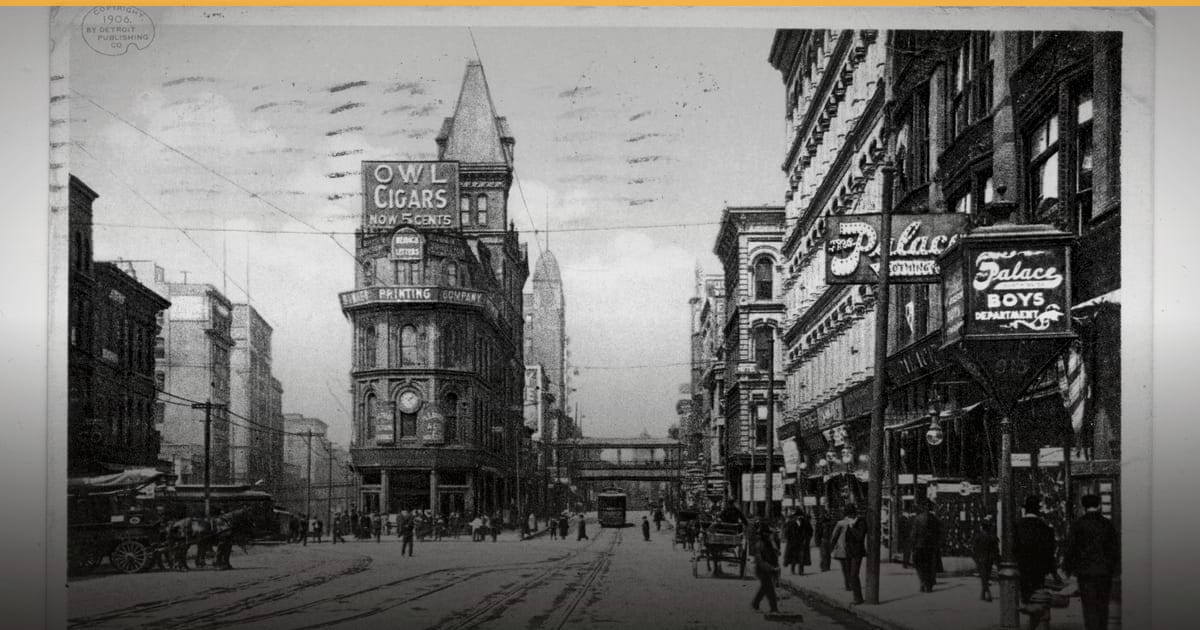
The Pendergast machine was not built by Tom. It was built by his older brother, Jim — "Big Jim" Pendergast — who came to Kansas City in 1876, worked in a packing house and an iron foundry, and, by the early 1880s, had bought himself a saloon and boarding house in the industrial West Bottoms. (Local legend has it he bought the first one with winnings from a horse named Climax; the saloon that followed carried the name.) That saloon was more than a bar. It cashed the paychecks of meatpacking workers, extended them loans, fed the hungry, and found men jobs — and in return, those men voted the way Big Jim asked. He was elected alderman in 1892 and built a Democratic faction known as the "Goats." A saloon had become a political machine.
Tom came down from St. Joseph in the 1890s to work for his brother, and Jim taught him the whole trade — how to turn out a bloc of voters, how to trade favors, how to win. When Big Jim died in 1911, the last man he asked to see was Tom. The machine passed from the brother who founded it to the brother who would make it infamous.
The Businessman Boss
Here is what most people miss about Tom Pendergast: he was, on paper, a legitimate and very diversified businessman — and a striking amount of that business was liquor.
He owned the T. J. Pendergast Wholesale Liquor Company (prudently renamed the Pendergast Distributing Company during Prohibition), the Atlas Beverage Company, and the City Beverage Company — the sole distributor of Anheuser-Busch products in Kansas City. When you controlled the police, the prosecutors, and the beer distributorship all at once, Prohibition wasn't a threat. It was a business opportunity.
And it went well beyond booze. Pendergast was vice-president of the Ready-Mixed Concrete Company — and that is where the empire poured itself, literally, into the city's foundations. In 1931, in the teeth of the Depression, Kansas City launched a roughly $50 million public-works program called the Ten-Year Plan: courthouses, a municipal auditorium, city hall, police headquarters, roads, sewers. An extraordinary share of that concrete came from Pendergast's company. The joke wrote itself — the boss sold the city the ground it stood on.
The Machine and the Man It Made Honest
By 1926 the Pendergast faction had swallowed its last rivals and effectively ran Kansas City and Jackson County — this county, our county, Independence included. And it is here that the machine intersects with the most famous honest man it ever produced.
The Pendergast organization needed a clean, well-liked candidate to carry the rural, eastern end of Jackson County, and in 1922 it settled on a failed haberdasher and war veteran named Harry Truman. He won his race for Eastern Judge, launched from the upstairs room at 211 West Lexington — directly across the street from this lounge — and rose through the machine's ranks to Presiding Judge and, in 1934, to the United States Senate, where opponents sneered at him as "the Senator from Pendergast."
The remarkable thing, by essentially every serious account, is that Truman stayed personally honest inside a deeply corrupt organization. He administered the county's building programs — programs built partly on Pendergast concrete — without lining his own pockets. He owed the machine his career and never pretended otherwise, and he also never became it. That tension is the most interesting thing about both men.
The Fall
Empires built on unpaid favors tend to collapse over paperwork, and Pendergast's did. In 1936 his people rigged an election too brazenly and drew the attention of federal investigators. The thread they pulled led to a bribe: Pendergast had taken a large payoff — commonly put in the hundreds of thousands of dollars — to settle an insurance-company dispute in the industry's favor, and he had not paid income tax on it.
In 1939 the government convicted Boss Tom Pendergast of income tax evasion. He was sentenced to fifteen months and served roughly a year in the federal penitentiary at Leavenworth, paid back taxes and penalties, and came out barred from politics. His health, already failing after a 1936 heart attack and cancer diagnosis, never recovered. He died on January 26, 1945.
And here is the ending that tells you everything: three days after Tom Pendergast died, the newly sworn Vice President of the United States flew home to Kansas City, on a military plane, to attend the disgraced old boss's funeral — over the horrified advice of nearly everyone around him. Harry Truman went because Pendergast had been his friend and had made his career, and Truman did not abandon friends to protect his image. "He was always my friend," Truman said, "and I have always been his." Ten weeks later, Truman was President.
Raise One to Boss Tom
You can drink to the whole improbable story tonight, because a Kansas City distillery has made it easy. Tom's Town Distilling Co. takes its name straight from Tom's Town, the classic book about Pendergast's Kansas City, and it bottles a bourbon called Pendergast Royal Gold — the boss's name on a label, sold openly and legally, in the city he once ran from behind a bar.
There is a neat justice in that. Pour a Pendergast at a cocktail lounge that sits across the street from where his machine launched a president, in a county he controlled top to bottom, and toast the saloon-keeper's brother — himself a saloon man before he was a boss — who kept the whiskey flowing. He'd have approved of the pour. He always did.
Next in the series: the sound that all that open liquor paid for — how Kansas City's never-closing clubs made it one of the birthplaces of American jazz.